

Sustainable at work
Sustainability is a priority for Lund University. We want to practice what we preach and strive to be a sustainable and resource-efficient organisation. Lund University is to offer a good and inclusive working environment while striving to minimise climate and environmental impact. Find out how you can work more sustainably.

The University’s sustainability work
Lund University is among the highest ranked universities worldwide when it comes to sustainability. Read more about how the University works with sustainability in research, education and external engagement.

Find out more about sustainability
Is it mandatory to order vegetarian catering? How many of the Sustainable Development Goals are being achieved globally? Take the online sustainability course in English.

See strategies and action plans
The University is actively working to integrate sustainable development into all its activities. Find out more about the University's sustainability policies, strategies and plans.

Help make Lund University more sustainable
You are welcome to share your ideas and suggestions for improvement for a sustainable University.
Travel and meetings
Tips on choosing environmentally friendly options for travelling to work, meetings or conferences to reduce your carbon footprint.

Choose the train for business travel in Europe
Whenever possible, choose rail rather than air for business travel within Europe. All train journeys abroad must be booked through the Danish travel agency Togrejse. They specialise in international rail travel.

Getting to work sustainably
The University works to promote sustainable travel to and from work and studies. Our ambition is to increase the share of cycling and public transport journeys to reduce our carbon footprint and to promote health and a greener urban environment.

Hold the meeting digitally instead
Lund University provides a range of tools to facilitate digital meetings.

Sustainable Travel Stories
Read travel stories from LU staff who have chosen the train for their business trips or found other ways to participate without travelling.
Purchasing and procurement
The University buys many goods and services every year. Our purchases have a major impact on the climate and the environment. Learn more about how to think more sustainably when buying goods and services.

Reuse of IT equipment
Recycle your computer, mobile phone or other IT equipment free of charge. The University has a contract with a company for the recycling and reuse of IT equipment.

Reuse of furniture
By selling the furniture you no longer need and reusing existing furniture, you save both money and the environment. Read more in the guidance on a circular economy for furniture and purchasing new furniture.

Sustainable food and drink purchasing for events
Find out more about how you can purchase sustainable meals and snacks for meetings and conferences. Restaurants and cafés on campus are encouraged to offer sustainable meals.

Buy goods and services sustainably
Our purchases account for a large part of our climate impact. When you follow the University's agreements, you contribute to more sustainable purchasing.
Save, sort and report
Our activities consume large amounts of energy and generate a lot of waste. By saving energy and minimising and sorting our waste, we help improve resource management. The goal is resource-efficient operations with the smallest possible climate and environmental impact.

Sorting and managing waste
Waste must be managed in a healthy and environmentally acceptable manner. All waste should be minimised or recycled so that people and the environment are not put at risk.

Reporting environmental deviations
Things do not always go as planned in our operations and we need to learn from our mistakes. Environmental deviations are to be reported for this reason. Read more about what can be an environmental deviation and how to report it.

Save energy
The University is working to reduce energy usage and make it as efficient as possible. Read more about how small changes you can make as an employee help to avoid energy waste.
Sustainable work environment
The aim of Lund University's work environment management is to create a sustainable work environment that is felt to be conducive to development, stimulating, safe and secure. Work environment and safety must be considered in everything we do and be a natural part of all planning.

Your work environment and health
Your health is important. As an employee you are entitled to a health promotion hour, glasses for computer work and reimbursement for health promotion, healthcare and medication costs etc. Also read about how to report incidents, occupational injuries or victimisation as well as the support that is available if you become ill.

Gender equality and equal opportunities
Read more about the University's systematic work to prevent discrimination.

Your health
Find out more about the University's wellness programmes, reimbursement of medical expenses and medicines, adaptation and rehabilitation in case of injury or illness, support in the event of alcohol and drug-related problems, and more.
News on sustainability

LU is part of the Cycling Challenge 2026 – are you in?
Do you usually commute by car or public transport? Challenge yourself by cycling to work for six weeks.The first 300 to register will get a goody bag.

4,000 visitors as Sustainability Week celebrated its 10th anniversary
Sustainability Week 2026 was a well-attended programme, filled with discussions, meetings and activities focused on sustainable development.

Sustainability progress continues, but climate neutrality remains a challenge
The environmental report shows that we are meeting many sustainability targets, increasing train travel and tightening environmental requirements.
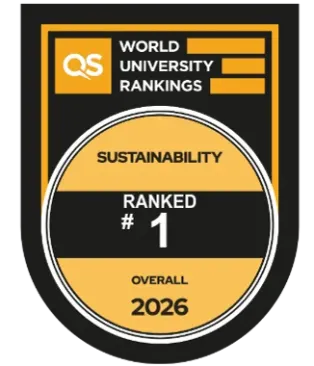
World leader in QS sustainability ranking 2026
With first place in the QS Sustainability Rankings 2026, the university is cementing its position as a world leader in sustainability. This spurs us on to continue leading the way towards a sustainable society in our research, our courses and study programmes, and in our everyday lives.
The ranking covers approximately 2,000 higher education institutions from around 100 countries and measures how universities contribute to a sustainable future – through research, education/training/programme* and their ways of operating as organisations.
CoAction – external collaboration for a climate-neutral Lund by 2030
CoAction is a collaborative project in Lund, where the municipality, university, businesses and organisations work together on transport and energy issues to achieve the goal of climate neutrality. Lund University participates in working groups on future vision, cycling and car parking, among other things.
If you would like to get involved in CoAction, please contact Environmental Manager Claes Nilén at claes.nilen@bygg.lu.se.
Subscribe for the Sustainability Forum Newsletter
Want to get monthly updates on research, events et cetera within sustainability at Lund University? Please fill in your e-mail address through the link.