

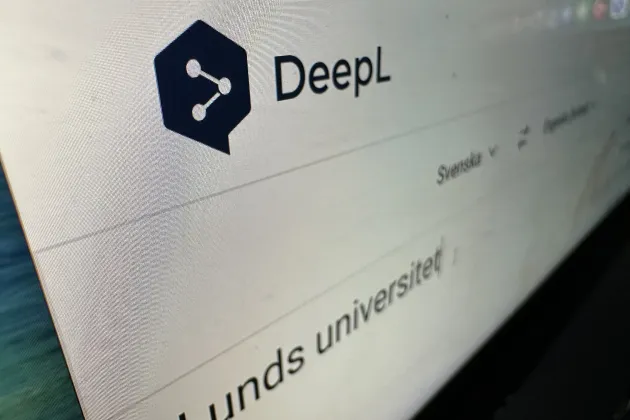
DeepL is an AI-powered translation tool primarily used for translating text from Swedish to English. Lund University has now purchased licences for the tool that are being distributed to designated employees at the faculties and divisions.
“We are aware that many people already use various AI tools for translation, but with this initiative we want to demonstrate the benefits of using tools purchased and managed through the right channels. It's not just about quality, support and training; it's also about being able to rest assured that information is handled and stored securely,” says Jennie Paldanius, senior strategist in the Ad hoc group, which is funding the licences.
Customised terminology
A major advantage of using DeepL with an LU licence is that the translations produced are more consistent and accurate. Each licence includes five 100-word glossaries that can be adapted according to faculty, department or subject area.
“We are happy to create and maintain glossaries free of charge, based on users' needs. We have already developed a general LU glossary which can be uploaded immediately to help users get started quickly,” says Hailey Kristoffersson, team manager at Translation and Language Services. “The translation team will manage the tool and work to improve the quality of the resulting translations.”
The translation team also provides support and guidance on the most effective use of AI tools for translation.
Licences distributed via the faculties
The 100 licences have been distributed to the faculties and divisions, which then decide which employees are to have access. The heads of the faculty offices and divisions have been contacted and informed of the number of licences allocated to their organisation.
“Those who are given access to a licence will receive information directly from Translation and Language Services on how to log in and get started. We also look forward to following up with users after some time has passed to hear about their experiences and learn how we can better support them,” says Hailey Kristoffersson.
The licences are valid for one year and primarily aim to ensure high levels of security and quality in AI-based translations.
Anyone who feels they have been left out of the licence allocation through the divisions and faculties can contact Translation and Language Services by e-mail directly.
“Even if we are unable to meet all requests immediately, they can still inform future discussions,” says Hailey Kristoffersson.
Read more
Contact: oversattning [at] legal [dot] lu [dot] se (oversattning[at]legal[dot]lu[dot]se)